
The Dog’s Perspective
When it comes to dog training, there have been two popular, yet distinctly different, training philosophies. From Cesar’s Corner comes training from the Wolf’s Perspective, based on the pack mentality of wolf lore. At the other end of the spectrum is the Positive Position of training, the Human’s Perspective influenced by anthropomorphic ideals. Ironically, dogs are neither wolves nor humans – they are dogs. The most logical and effective training approach is from The Dog’s Perspective.

The Dog Nose Knows
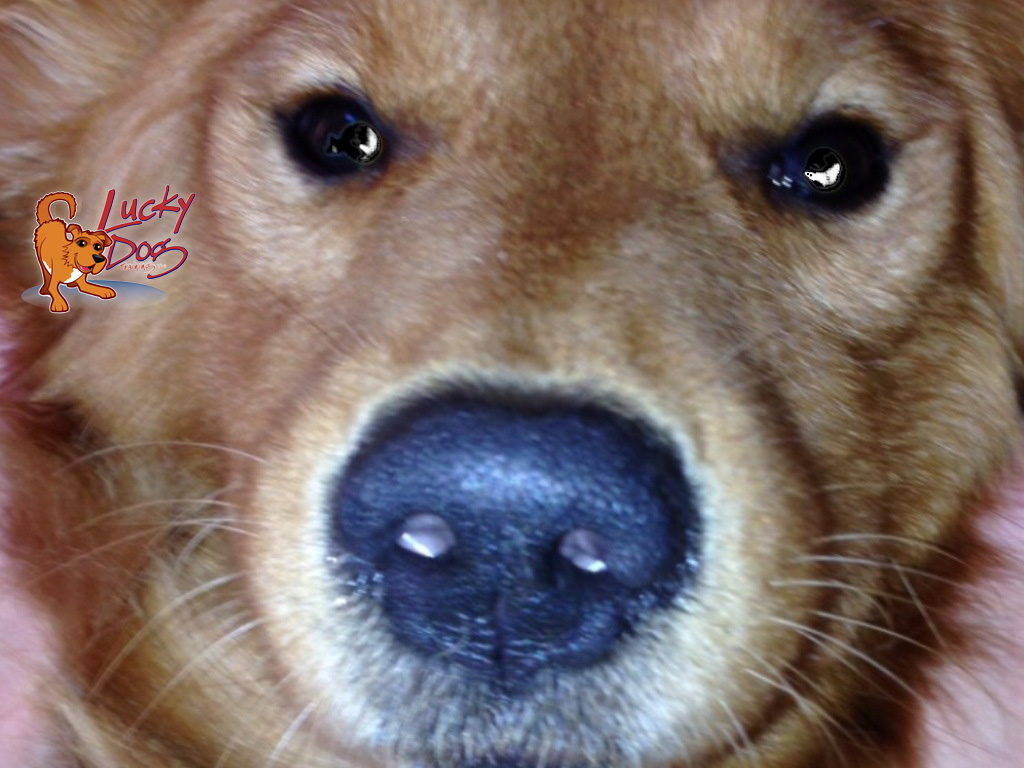
To understand The Dog’s Perspective, we first must understand how dogs “see” their world. The primary sense used by humans is vision. In contrast, the primary sense used by dogs is smell, or olfaction. Not only is the size of most dogs’ snouts visually larger, their sense of smell is thousands of times more sensitive. The relative size of a dog’s brain devoted to olfaction is over 30 times larger than humans (Kavoi and Jameela 2011), and dogs have over 40 times more olfactory receptors than their human companions (Correa 2011). Dogs use smells, scents and pheromones emitted by other animals, including humans, to make sense of their surroundings. Dogs can determine people’s moods based on their scent. They can distinguish human 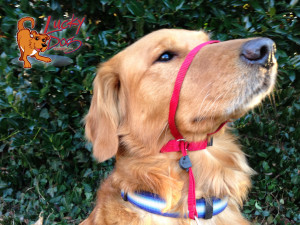 emotions like happiness, anger, frustration and fear. They can detect cancer in human bodies and bombs in suitcases just by taking a whiff. A dog’s nose knows a lot.
Because their noses are so sensitive, take care not to offend dog noses. Dogs are extremely susceptible to household chemicals, smoke, perfumes, candles, incense, etc. Smell of food is why some dogs cannot train with food rewards; they appear food obsessed. Dogs’ noses are delicate, sensitive and fragile. Unless no other alternative exists, head halters that apply pressure on dog snouts are not ideal for training. Better training alternatives exist that avoid placing pressure on dog’s delicate noses.
Correa, J. D. 2011. The Dog’s Sense of Smell. Alabama Cooperative Extension System. UNP-0066. Retrieved from http://www.aces.edu/pubs/docs/U/UNP-0066/UNP-0066.pdf
Boniface, M. K. and H. Jameela. 2011. Comparative Morphometry of the Olfactory Bulb, Tract and Stria in the Human, Dog and Goat. International Journal of Morphology 29(3):939-946, 2011. http://www.scielo.cl/pdf/ijmorphol/v29n3/art47.pdf